
Today's Contents
Reporter's Notepad:
- Partner Contribution: Naftogaz gas purchases for next winter to follow process set out in earlier EBRD-financed procurements
Just The Facts:
- Norwegian DFI Norfund visits Ukrainian government as it establishes local team, weighs investment possibilities
- Interpol places former Ukrtatnafta executives on wanted list over UAH 5.8 billion embezzlement
- Zelensky seeks Western help to develop drones to intercept aerial attacks
Here's What They Think:
- EUobserver: Ukraine's EU accession could aid the bloc's Common Agriculture Policy
- The Hill: Trump talks tough on Ukraine, but fails to follow with concrete actions
Sober Second Thought:
- Ukraine anti-corruption progress is notable but momentum must continue for effective reconstruction, OECD review says
Rebuilder's Social
- Ukrainian Railways advertises tender for gas engine power plants, First Deputy Prime Minister Yulia Svyrydenko talks about AI in demining, and the Ukrain Reconstruction Forum 2025 in Vienna is summarized.

Dear subscribers,
As part of URN's Partner Program, CMS Ukraine covers, exclusively, a procurement issue of interest to investors and suppliers in the energy sector: the process state gas company Naftogaz will use to buy gas for next winter.
The following story is reported exclusively for Ukraine Rebuild Newswire by the law firm CMS Ukraine as part of a partnership created to better inform investors in Ukraine's reconstruction.

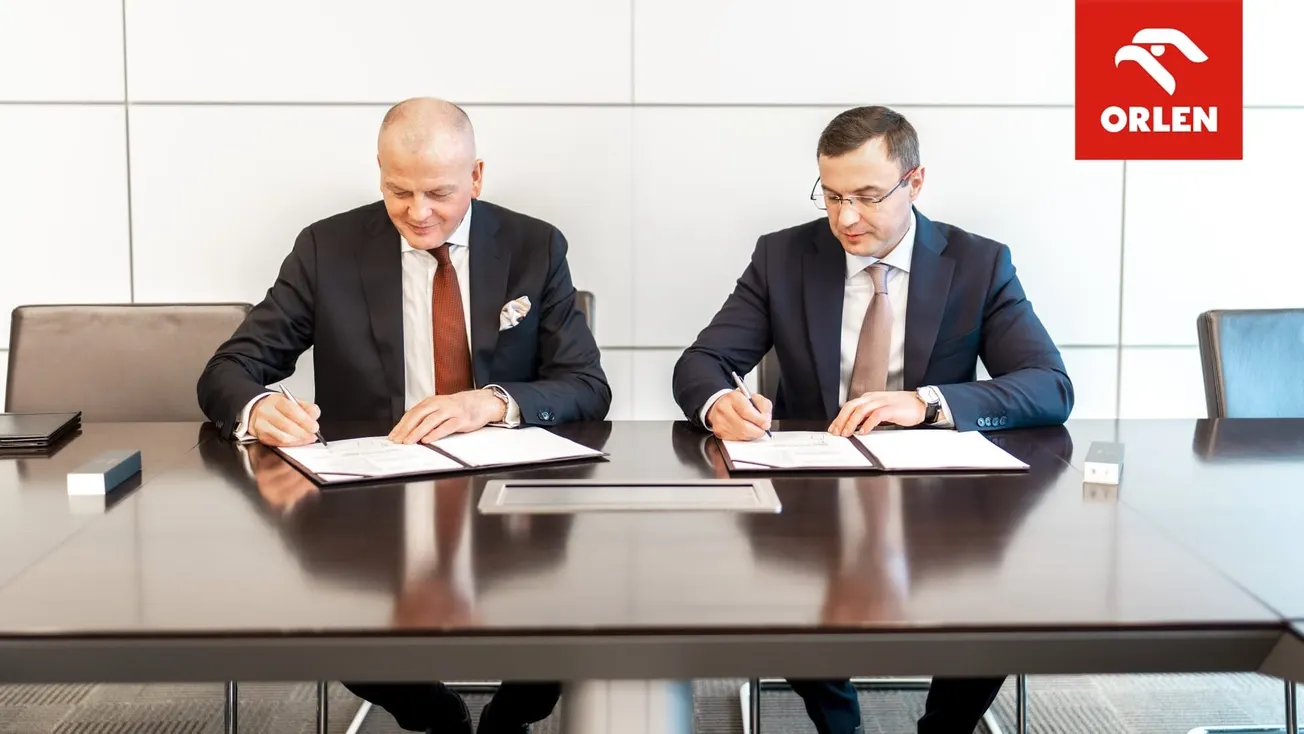
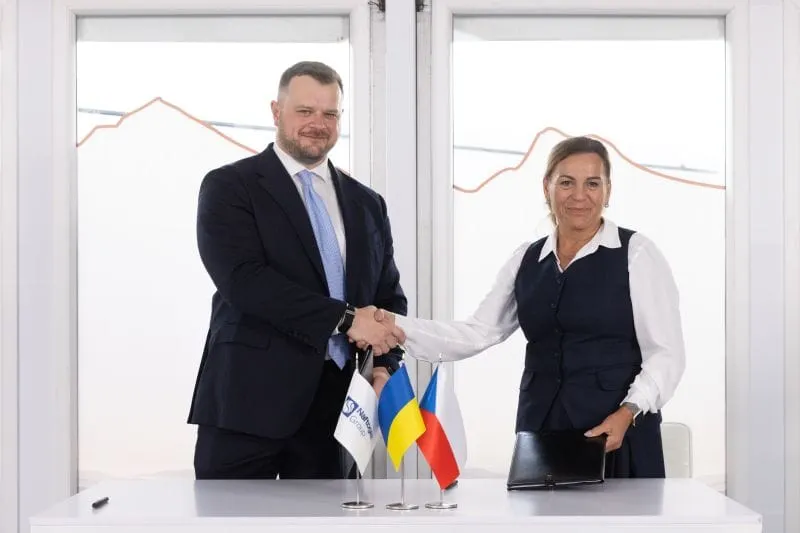
Naftogaz gas purchases for next winter to follow process set out in earlier EBRD-financed procurements: CMS
Ukrainian state-owned gas company Naftogaz, which is set to receive €409 million in international funding announced last week to buy gas for next winter, will follow a procurement framework set out in previous procurement campaigns financed by the European Bank for Reconstruction and Development (EBRD).
As reported by URN, the EBRD announced a €270 million sovereign-guaranteed loan on April 25 to Naftogaz to bolster Ukraine's energy security. The funding is complemented by a €139 million grant from Norway through the Norad fund, bringing the total support to €409 million.
The combined financial package is meant to procure about 1 billion cubic meters of natural gas to ensure a stable heating season amid repeated attacks on Ukraine's energy infrastructure. To source such volumes, Naftogaz will open a procurement procedure developed in cooperation with the EBRD.
Under the procedure, natural gas will be procured in a tender between a closed list of pre-qualified suppliers, mostly based in the UK, EU, Switzerland and the US. These suppliers have already carried out agreements with Naftogaz for delivery of the natural gas based on a market-accepted template of European Federation of Energy Traders (EFET, now called Energy Traders Europe) and received no-objection confirmations from the EBRD.
Naftogaz will invite these suppliers to submit price offers. This approach follows the framework established under previous EBRD-financed gas procurement campaigns, where Naftogaz implemented a simplified, transparent process using a closed list of pre-qualified suppliers (in 2023, 20 companies had pre-qualified). It balances the need for expedited contracting with procurement transparency and oversight from EBRD.

Norwegian DFI Norfund visits Ukrainian government as it establishes local team, weighs investment possibilities
Norfund, the Norwegian development finance institution that was given the green light to invest in Ukraine for the first time last year, met with senior Ukrainian government officials to discuss operations in the country.
Norfund "is particularly interested in supporting the growth of Ukraine’s private sector, creating jobs and enhancing economic resilience," the Ukrainian government said in a press release, adding that the fund is now building its Ukraine team and exploring investment possibilities.
Norfund specifically targets areas including "financing renewable energy projects to strengthen Ukraine’s energy independence, and investing in export-oriented manufacturing, agriculture, and the banking sector, as well as Ukraine’s overall recovery, including infrastructure restoration," the government said.
The Norwegian government last year authorized Norfund to begin operating in Ukraine, outside of its normal geographic areas of Africa and Southeast Asia, and set aside NOK 250 million ($24.3 million) for it.
This week's meeting included Deputy Finance Minister Olga Zykova and Public Debt Management chief Yuriy Butsa, Norfund CEO Tellef Thorleifsson, Executive Vice President for Financial Inclusion Erik Sandersen, and Senior Vice President for Ukraine Fund Simen Berger Øby.
Interpol places former Ukrtatnafta executives on wanted list over UAH 5.8 billion embezzlement
Interpol has placed former executives of a Ukrainian oil refining company on its wanted list over alleged embezzlement of UAH 5.8 billion ($140 million), according to Ukraine's National Police.
The police press release did not name the company but identified one of the executives involved as "a former chairman of the board of one of the country's largest oil refining."
However, a law enforcement source told Interfax-Ukraine that the case concerned Ukrtatnafta.
The unnamed official allegedly collaborated with his deputy, head of one of the departments and six entrepreneurs, the police said.
"The organizer of the scheme entered into contracts with an oil refining corporation for the supply of oil products, for which they did not pay. Instead, they legalized the funds received through accounts in a foreign bank," the release said.
The police also froze securities accounts held with a French investment firm connected to the former board chairman, as well as corporate rights to multiple businesses.
Zelensky seeks Western help to develop drones to intercept aerial attacks
Ukrainian President Volodymyr Zelensky said he has ordered his government to step up efforts to engage Western help to develop drones to intercept aerial attacks.
"Today, I instructed the Ministry of Defense and the Ministry of Foreign Affairs to work more actively with our partners to ensure funding for the production of just such interceptors," Zelensky said in his nightly address to the nation yesterday.
He specifically mentioned the importance of intercepting the Shahed drones an Iranian-designed weapon launched by Russia capable of speeds exceeding 340 kms per hour with a radius of 2,500 kms.
"The downing of Shahed drones, including with the use of other drones ... is one of the most advanced areas of modern warfare," Zelensky said. "We will develop this direction as much as possible, and each region will have its own area of responsibility for this very work."
The statement came the same day as two people were killed and eight injured in a drone attack on Kyiv, according to Kyiv Mayor Vitaliy Klitschko.

EUobserver: Ukraine's EU accession could aid the bloc's Common Agriculture Policy
To build broader European support for Ukraine's EU membership, it is crucial to address concerns that Ukraine's vast agricultural sector would absorb a disproportionate share of EU subsidies, undercut food safety standards, and create unfair competition, Klara Lindström, an analyst at the Stockhold Centre for Eastern European Studies, wrote in an opinion piece for EUobserver.
Lindström notes that beyond integration challenges, Ukraine's membership could with much-needed reforms in the Common Agricultural Policy—just as previous enlargements did—paving the way for a more productive and resilient European agricultural system.
The Hill: Trump talks tough on Ukraine, but fails to follow with concrete actions
US President Donald Trump has repeatedly touted his close relationship with Russian leader Vladimir Putin, claiming he could end the Russia-Ukraine war quickly. Despite strong rhetoric and sporadic diplomatic gestures, such as proposing a ceasefire and warning of tariffs and sanctions, Trump has failed to follow through with concrete actions, Steven Pifer, a former US ambassador to Ukraine, wrote in an opinion for The Hill.
The piece argues that Trump has tools at his disposal—tightening sanctions, boosting military aid to Ukraine, or working with allies to repurpose frozen Russian assets. Without such measures, Trump's tough talk lacks credibility, and Putin has little incentive to pursue peace seriously.

Ukraine anti-corruption progress is notable but momentum must continue for effective reconstruction, OECD review says
Ukraine has significantly advanced its anti-corruption reforms over the past decade, enhancing transparency, public accountability, and institutional integrity, according to the OECD's latest Integrity and Anti-Corruption Review of Ukraine.
However, corruption risks during wartime remain high and a well-functioning public integrity system is crucial to ensuring Ukraine's transparent and effective reconstruction process.
Driven by public demand and aspirations for EU accession, Ukraine has bolstered the independence of its anti-corruption institutions, implemented open data policies, and digitalised public services, according to the review.
These efforts have begun to yield results: public perceptions of corruption, though still elevated, have improved, and self-reported experiences of corruption among citizens have dropped sharply. The OECD's Public Integrity Indicators place Ukraine above the OECD average in several key areas, including strategy design, conflict-of-interest regulation, and political finance oversight.

While Ukraine has established a robust legal and strategic anti-corruption framework—including the 2021–2025 National Anti-Corruption Strategy—the effectiveness of these tools hinges on behavioural change, especially within sub-national administrations, according to the review. To address it, the OECD review recommends enhancing inter-agency cooperation, developing mechanisms for evaluation and lesson-learning, and embedding ethical leadership into the civil service.

Judicial integrity emerges as another area requiring continued attention. Although reforms since 2016 have introduced new standards for the selection and promotion of judges, and integrated judges into whistleblower and conflict-of-interest systems, many processes remain incomplete. The OECD suggests strengthening whistleblower protection, finalising the judicial ethics code implementation, and increasing transparency in case allocation to ensure accountability and build public trust in the judiciary.
In the public policy sphere, Ukraine's framework for access to information and political financing is relatively strong, according to the review. However, swift enactment and later evaluation of its lobbying legislation is needed. It also calls for more transparency in government decision-making during Martial Law, such as publishing ministers' agendas and clarifying the application of public interest tests for restricted information.

The review also highlights the private sector's role in curbing corruption. Ukraine is encouraged to promote business integrity by fostering adoption of anti-corruption compliance programmes, particularly among state-owned enterprises and companies engaged in public procurement. The OECD says compliance mechanisms must be effective in practice, not merely as formalities. Additionally, it recommends incentivising ethical behaviour through criminal law mechanisms, such as recognising corporate compliance efforts as mitigating factors in prosecution.
In summary, the OECD recommends strengthening Ukraine's legal and institutional framework, embedding a culture of integrity within state bodies and society, enhancing judicial accountability, and reinforcing control and audit mechanisms. It concludes that these efforts are essential to "promote trust, drive economic recovery and sustain international support for Ukraine now and in the future."

Social Media Posts
Ukrainian Railways Tender for Gas Engine Power Plants
Ukrainian Railways promoted a tender for the purchase of gas engine power plants as part of its plans, backed by the European Bank for Reconstruction and Development (EBRD) to build out distributed electricity generation.
The post links to an EBRD announcement of plans for a €180 million sovereign guaranteed loan so the company can install up to 270 MW of small-scale gas-fired power generation capacity.
AI in Demining
Yulia Svyrydenko, Ukraine's first deputy prime minister and economy minister, posted about the use of AI in demining, including "AI Labeling Sprint — a hackathon focused on creating a dataset that will help train AI algorithms to recognize explosive devices using images captured by UAVs during fieldwork."
"Another recent AI-powered project is GRIT, a platform designed to prioritize demining efforts. Developed together with Palantir Technologies, the project is being piloted in Kharkiv region. GRIT uses artificial intelligence to analyze over 100 data sets from 26 sources — including cadastral maps, satellite images, combat aftermaths, social infrastructure, agriculture, population density, and more."
Ukraine Reconstruction Forum in Vienna
Kateryna Kyslenko, head of the Service Desk Ukraine for Germany's Ost-Ausschuss der Deutschen Wirtschaft, which supports companies investing in Eastern Europe, recapped the Ukraine Reconstruction Forum held in Vienna.
Discussion focused, in part, on agencies involved in investment insurance, such as the World Bank's MIGA, as well as the European Union's "role in facilitating Ukraine's recovery, including financial aid, policy support, and integration efforts."

URN Daily: Sense Bank and Ukrgasbank for sale? And US seeks to cancel $4.7 billion of Ukraine's debt