
Today's Contents
Reporter's Notepad:
- Exclusive: Tetra Tech lays off dozens of workers in Ukraine; US prime contractors, unpaid for work done, face local office closures
Just The Facts:
- Putin says US ceasefire proposal for Ukraine 'correct' but needs to be clarified
- Sweden allocates extra SEK 1.4 billion for Ukraine's reconstruction in largest civil support package
- Canada delivers CAD 2.5 billion to Ukraine as first tranche under G7 ERA initiative
- Ukraine's economy ministry, Kyiv School of Economics seek investment projects for 2025 Rome conference
- Ukraine signs deal with Finland on enhanced defence cooperation
Here's What They Think:
- SCMP: Forcing Ukraine into peace deal will lead to chaos
- The Guardian: Not clear how US-proposed ceasefire in Ukraine would be monitored
Sober Second Thought:
- Socio-economic, financial impacts of Russia-Ukraine vary across sectors and regions, but impact severe globally, study finds

Dear subscribers,
In recent weeks, we've been contacted a number of times by Ukrainians looking for work after the USAID freeze. That prompted us to start poking around.
Following a series of off-the-record conversations, we've put together the following news story.
We're opening this edition of the newsletter to both free and premium subscribers. Feel free to distribute and share.
Tetra Tech lays off dozens of workers in Ukraine; US prime contractors, unpaid for work done, face local office closures
Tetra Tech, the global consulting and engineering firm, has laid off dozens of workers in Ukraine and faces tens of millions of dollars in costs locally due to the USAID cuts, including a payment freeze on work completed, according to sources familiar with the matter.
The company is one of the largest US implementing partners, or prime contractors, in Ukraine, along with competitors such as DAI Global and AECOM. They now fear further losses of key staff every day the USAID pause continues, even as the Western world contemplates a historic reconstruction project that the World Bank estimates will cost $524 billion.
Most of the more than 300 Tetra Tech employees in Ukraine face the prospect of redundancy unless other donors quickly replace missing US funding. Around 50 have already been laid off, said one source, and the company is sitting on expensive equipment it has bought specifically to carry out contracts in Ukraine that may never be delivered to the partner organisations.
Tetra Tech now has "a short window of time where it has a large number of under-utilised, experienced engineers and analysts available to lead projects from alternative donors," one source said. "If donor nations are slow to move and don’t take advantage of this capacity then we may see our highly valued staff either leaving the country or being mobilized into the Ukrainian army."
'The reconstruction hasn't even started yet'
US contractors are now looking to the European Union and other major donor nations, such as the UK, Sweden and Japan for contracts to carry out some of their unfinished work in Ukraine.
"Our people and the people of Ukraine depend on it," said an employee of one of the prime contractors. "The cold season is not over. The fighting is not over. The reconstruction hasn't even really started, and our margins are thin. Profits are not the core motive for our work – we are mainly Ukrainians working for the good of our country.”
The USAID contracts were frozen in January when the newly installed Trump administration ordered a 90-day review of US foreign aid contracts, including hundreds of millions of dollars to shore up Ukraine's energy security, modernize its border control posts, overhaul water supply systems, reinforce infrastructure against Russian attacks and more.
Unpaid since November
Aggravating the situation, due to the state of billing cycles at the time of the freeze order, prime contractors haven't been paid even for work completed in November, December and January, calling their financial viability into question. They, in turn, they haven't been able to pay their numerous smaller subcontractors, as Ukraine Rebuild Newswire reported last month, leaving many more companies at risk.
"Contractors have been paralyzed," one source familiar with the contracting scene in Ukraine told Ukraine Rebuild Newswire. "They can't proceed with carrying out new work until they get paid for work done on previous projects."
Last week the US Supreme Court ruled in favor of the federal judge who ordered all outstanding payments to USAID contractors to be disbursed as part of a temporary restraining order to prevent further harms to the plaintiffs in the ongoing legal cases. Some payments have begun to trickle through but Ukraine Rebuild Newswire was told the lack of qualified staff remaining at USAID means it could take weeks before all due invoices are honored.
US Secretary of State Marco Rubio wrote on the social media platform X earlier this week that the Trump administration has now cancelled 83% of US foreign aid contracts, scrapping tens of billions of dollars in planned spending.
After a 6 week review we are officially cancelling 83% of the programs at USAID.
— Marco Rubio (@marcorubio) March 10, 2025
The 5200 contracts that are now cancelled spent tens of billions of dollars in ways that did not serve, (and in some cases even harmed), the core national interests of the United States.
In…
One of the 5,200 contracts terminated, according to a list leaked to Washington-based Punchbowl News, is the $920 million program, which has been largely completed, to shore up energy security in Ukraine managed by Tetra Tech and several dozen smaller contracts in the country.
The legality of the move remains in dispute. But, as one source told Ukraine Rebuild Newswire, some of the prime contractors are afraid to sue the US government, the source of most of their revenue, fearing it could jeopardize existing or future contracts with other federal government agencies.
In the meantime, construction sites remain idle, key equipment goes undelivered and purpose-bought machinery lies unused.
"Many of our activities and tenders for equipment have been cut short," one source said. "This means a wide range of equipment for Ukraine is in some cases, is just sitting in warehouses, undelivered."
"It's a mess," the source said, calling on the Trump administration to "at least rescind the stop work orders for critical programs in Ukraine that have survived State Department’s extreme and flawed review process."
For questions related to daily news, story suggestions, scoops and other newsy matters, please message URN newsroom chief Valentina Bajic at valentina@ukrainerebuildnews.com.
For sponsorships, the URN Guidebooks, the Tips for Investors column and other general matters, email founder Adam Brown at adam.brown@ukrainerebuildnews.com.
If in doubt, email us both and we'll sort it out.
Now, on with the headlines of the day ...

Putin says US ceasefire proposal for Ukraine 'correct' but needs to be clarified
Russian President Vladimir Putin said on Thursday that Moscow agrees with the US ceasefire proposal for Ukraine but that a number of details need to be clarified before the fighting stops, as quoted by Reuters.
"We agree with the proposals to cease hostilities. The idea itself is correct, and we certainly support it," Putin told reporters at the Kremlin. "But we proceed from the fact that this cessation should be such that it would lead to long-term peace and would eliminate the original causes of this crisis."
Putin has said he wants Ukraine to abandon its NATO ambitions, for Russia to gain full control over the four Ukrainian regions it claims, and for limitations to be placed on the size of Ukraine's army, Reuters reported.
He has also emphasized his desire for Western sanctions to be eased and for a presidential election to be held in Ukraine—an idea Kyiv rejects as premature while martial law remains in effect.
Additionally, Putin outlined ceasefire-related issues that he believes require clarification and expressed gratitude to US President Donald Trump for his efforts to end the war.
"How can we and how will we be guaranteed that nothing like this will happen? How will control (of the ceasefire) be organized? These are all serious questions. There are issues that we need to discuss. And I think we need to talk to our American colleagues as well," Putin told reporters.
At a meeting between American and Ukrainian delegations in Saudi Arabia's port city of Jeddah on Tuesday, Ukraine agreed to a US proposal to enact an immediate, interim 30-day ceasefire, subject to acceptance and implementation by Russia.
Already on Thursday, Steve Witkoff, the US envoy assigned to the Ukraine-Russia war, landed in Moscow to press talks for a ceasefire.
Trump said those discussions would show if Moscow was ready to make an agreement. "Now we're going to see whether or not Russia is there, and if they're not, it'll be a very disappointing moment for the world," Trump said, as quoted by Reuters.
Sweden allocates extra SEK 1.4 billion for Ukraine's reconstruction in largest civil support package
Sweden said it is increasing its development assistance to Ukraine by over SEK 1.4 billion ($137 million) to support the country's reconstruction, development and humanitarian needs.
"The new support focuses on the most urgent needs such as energy supply, housing, medical care, mine clearance, safe schooling for children, vocational training for women and support for war veterans," said Sweden's Minister for International Development Cooperation and Foreign Trade Benjamin Dousa.
Douse emphasized that the assistance is Sweden's largest civilian support package to date. "This package will make a real difference for many Ukrainians."
According to the government news release, SEK 100 million will be allocated through the EU’s Ukraine Facility to support the energy and housing sectors, as well as other initiatives aiding Ukraine’s EU integration.
Additionally, SEK 100 million will go to the World Bank’s Ukraine Relief, Recovery, Reconstruction, and Reform Trust Fund (URTF) for rebuilding energy infrastructure, housing, healthcare, and transportation.
The aid "will strengthen Ukraine’s resilience, contribute to our recovery, and help Ukrainians affected by the war regain a normal life," Ukrainian Economy Minister Yulia Svyrydenko said in a social media post.
On Wednesday, Sweden's Minister for Foreign Affairs, Maria Malmer Stenergard, reaffirmed in the 2025 Statement of Foreign Policy that supporting Ukraine remains the government's "top foreign policy priority," according to a government release.
Canada delivers CAD 2.5 billion to Ukraine as first tranche under G7 ERA initiative
Ukraine has received the first CAD 2.5 billion ($1.7 billion) tranche from Canada under the G7 Extraordinary Revenue Acceleration for Ukraine (ERA) initiative, the government said.
The funds will be allocated to cover the priority needs of Ukraine’s state budget, according to a press release.
The ERA mechanism, valued at USD 50 billion, provides Ukraine with loan funds that will be repaid and serviced using future revenues from frozen Russian assets.
Canada's total contribution to the ERA initiative amounts to CAD 5 billion, with the loan provided on a 30-year term, according to the release.
"Canada is a reliable and steadfast partner of Ukraine. I am grateful for the support of the ERA mechanism," said Ukraine’s Minister of Finance, Sergii Marchenko. "In 2025, Canada chairs the G7, and I look forward to strengthening our cooperation and keeping the focus on Ukraine’s needs."
Ukraine's economy ministry, Kyiv School of Economics seek investment projects for 2025 Rome conference
Ukraine's ministry of economy, in collaboration with the Kyiv School of Economics, is seeking investment projects across key sectors of the Ukrainian economy, the government said in a press release.
The selected projects will be compiled into a catalogue showcasing the most promising opportunities and will be presented at the Ukraine Recovery Conference 2025 in Rome.
"Our goal is to enhance the visibility of Ukrainian businesses, foster strategic partnerships, and secure essential funding," said Oleksii Sobolev, First Deputy Minister of Economy of Ukraine.
The Kyiv School of Economics will oversee coordination with businesses, while leading consulting firms will assist in evaluating and processing proposals, the release said. The final selection of investment projects is set to be completed by mid-June 2025.
Following the conference in Rome, the database of projects, featured on Ukraine's Investment Portal, will serve as a reference for international financial organizations and development finance institutions to identify priority areas for funding.
Ukraine signs deal with Finland on enhanced defence cooperation
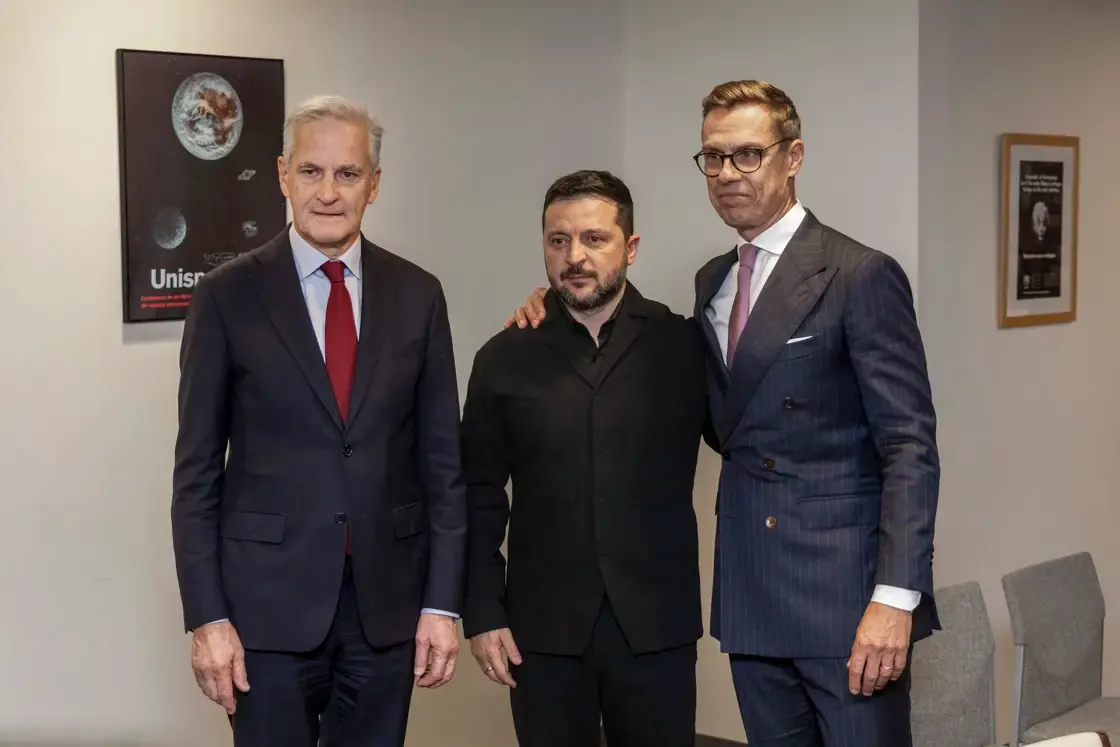
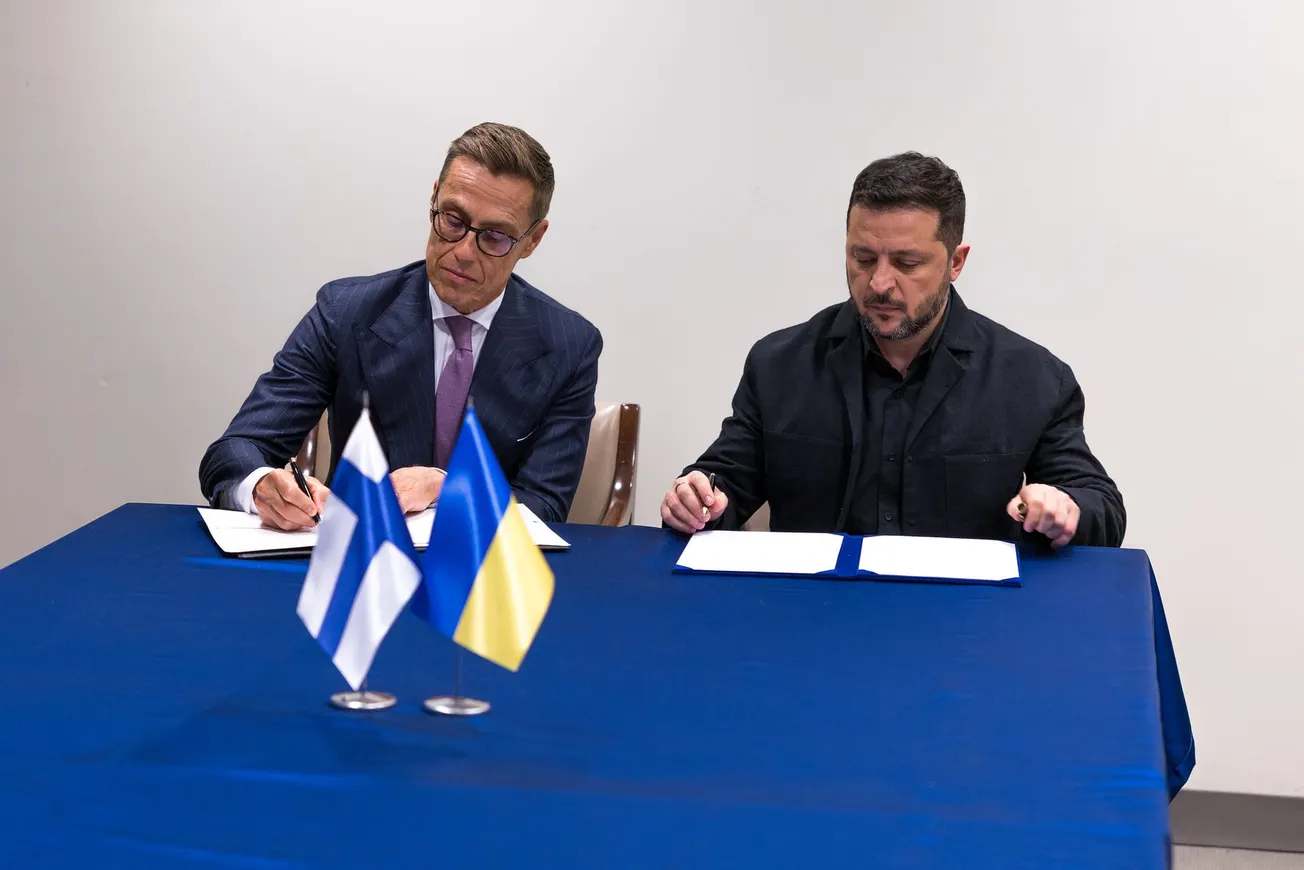
Finnish Defence Minister Antti Häkkänen and Ukraine's Defense Minister Rustem Umerov have signed a memorandum of understanding (MoU) meant to improve cooperation between the two countries on defense.
The agreement covers cooperation on defence materials, ammunition production, defence industrial projects, exchange of information, and R&D, the ministries of both countries said.
"Finland and Ukraine are on the same edge of Europe and, drawing from our historical experience, we share a perception of the threat of Russia," said Häkkänen. "Finland is committed to continuing its support for Ukraine. However, the relationship between our countries is not a one-way street but a mutually beneficial partnership."
He said Finland would incorporate Ukraine's wartime experiences against Russia into the development of its own defense system, according to a press release from the Finnish defense ministry.
Finland's 28th support package, valued at about €200 million, is currently awaiting approvals from the country's government, the release said, adding that its material assistance to Ukraine to date would total about EUR 3.3 billion.
"As before, we will not reveal the details of the aid package. What I can say is that this time the package contains artillery ammunition for which there is a great need right now in Ukraine," Häkkänen said.
Ukraine's defense ministry said in a press release that Umerov also met with representatives of leading Finnish defense and technology companies to discuss the advancement of satellite communications, telecommunications, armored vehicles, and the strengthening of maritime security.

SCMP: Forcing Ukraine into peace deal will lead to chaos
A forced Ukrainian capitulation, seemingly favored by US President Donald Trump, wouldn't bring stability but would unleash chaos and mass migration, a surge in illegal weapons, and, in a worst-case scenario, a Russian-backed civil war in Ukraine could follow, Sergey Maidukov, a Ukrainian writer and journalist, wrote in an op-ed for the South China Morning Post.
Russian President Vladimir Putin may appear "more generous than he has to be" to Trump, but he's the one who started the war and continues to wage it brutally. In the 11 years since seizing Crimea and eastern Ukraine, he has never backed down—defying sanctions, isolation, and economic pressure, Maidukov wrote.
The Guardian: Not clear how US-proposed ceasefire in Ukraine would be monitored
A ceasefire proposal from the US to which Ukraine has agreed does not even begin to explain how the halt in fighting would be enforced to prevent or restrain violations, Dan Sabbagh, The Guardian's defense and security editor, wrote in an op-ed.
A lasting peace is only possible if both sides refrain from provocation and aggression. Some ceasefires, like those in Korea or Cyprus, have endured because neither side was willing to reignite full-scale conflict, Sabbagh wrote. However, Russia's deep-seated hostility toward Ukraine suggests that Putin's ultimate goal of dominating his neighbor remains unchanged, he argued.

Socio-economic, financial impacts of Russia-Ukraine vary across sectors and regions, but impact severe globally, study finds
The cascading effects of the war between Russia and Ukraine significantly disrupted global economic growth, commodity prices, and financial markets across different regions and while some sectors have adapted, the broader economic consequences remain severe, particularly for vulnerable populations worldwide, a recent study published by Nature revealed.
The study found that the war has led to contractions in key economic indicators, with GDP shrinking between 0.7% and 1.5% globally within the first year. Inflation surged by 1.0% to 2.5% during the same period, impacting both developed and developing nations. Russia's economy took a major hit, with estimated welfare losses ranging from 4% to 14%, while the European Union (EU), particularly Eastern European countries, saw reductions of up to 5% in GDP due to their dependence on Russian energy imports.

One of the most pressing concerns is the impact on global food security, the authors wrote. Rising commodity prices have made calorie-sufficient and healthy diets increasingly unaffordable, particularly for lower-income countries. The study estimated that up to 163 million people now may be struggling to afford basic nutrition due to the conflict. The effects are most severe in Sub-Saharan Africa, South Asia, and parts of Latin America, where food imports from Ukraine and Russia were previously crucial to dietary stability.
The financial sector has also experienced turbulence with investors heavily exposed to European markets facing severe losses, while fossil fuel producers and exporters saw record profits as energy prices surged, as per the study. The war triggered a financial amplification effect, wherein sudden commodity price hikes led to inflationary pressures, compounding economic instability in multiple regions. Gas prices in European markets, for example, soared by over 70% immediately following the invasion, leading to a spike in energy costs for businesses and households alike.
Trade realignment has been another key consequence. Countries previously reliant on Russian and Ukrainian exports have had to source alternative suppliers, often at higher costs. The EU and the US have stepped in to replace lost grain supplies in regions such as North Africa and Southeast Asia, but this shift has not fully mitigated price increases. Some economies, particularly energy-exporting nations, have benefited from the redistribution of trade, while others struggle to adjust, according to the paper.
The study also underscores the role of financial markets in exacerbating economic instability. A surge in speculative activity following the war contributed to price distortions in commodities such as wheat, oil, and natural gas. This financialization of resources has deepened the crisis for consumers and businesses alike, forcing policymakers to consider stricter regulations on market speculation.
Despite these challenges, certain sectors have demonstrated resilience. Renewable energy investment has accelerated, as nations seek to reduce reliance on Russian fossil fuels. Additionally, food-producing regions outside Ukraine and Russia, such as Brazil and Canada, have expanded agricultural exports to help fill supply gaps.

Ukrhydroenergo Meets JICA
Ukrhydroenergo, the state hydropower producer, recapped a meeting with representatives of the Japan International Cooperation Agency (JICA) to discuss investment projects.
Kuge Katsuya, Senior Deputy Director General and Team Leader of the Energy and Mining Division of the Infrastructure Management Department of JICA, said he "currently exploring the possibility of supporting energy projects in Ukraine, including hydropower projects."
M-FLY Raises $1.3 million
Tech Ukraine, an NGO that supports Ukraine's tech ecosystem, promoted the news that M-FLY, a startup that develops a laser guidance system for UAVs, has raised $1.3 million.
"The funding round saw participation from Resist.ua, MITS Capital, and Freedom Fund," the linked article states. "Joining them were Boris Shestopalov and other private investors from Ukraine, Denmark, Grenada, and the USA, as well as an Estonian miltech company. Their support is a critical driver of M-FLY’s progress."
UkraineInvest Recap
UkraineInvest, the state investment promotion agency, published its weekly recap of investment and business-related news, including meetings with Japanese businesses and the Ministry of Economy's call for investment projects ahead of the Ukraine Recovery Conference in July in Rome.
Other items include plans by a Turkish investor to implement a wind farm project in the Zhytomyr region and the planned creation of a new industrial park in Zakarpattia, according to the post.

URN Daily: Sense Bank and Ukrgasbank for sale? And US seeks to cancel $4.7 billion of Ukraine's debt