
Today's Contents
Just The Facts:
- World Bank approves $664 million in additional funding for Ukraine under INSPIRE project
- Japan allocates $235 million to Ukraine under World Bank's RISE, LEARN projects
- EU commits to provide €18.1 billion to Ukraine as part of G7 loan
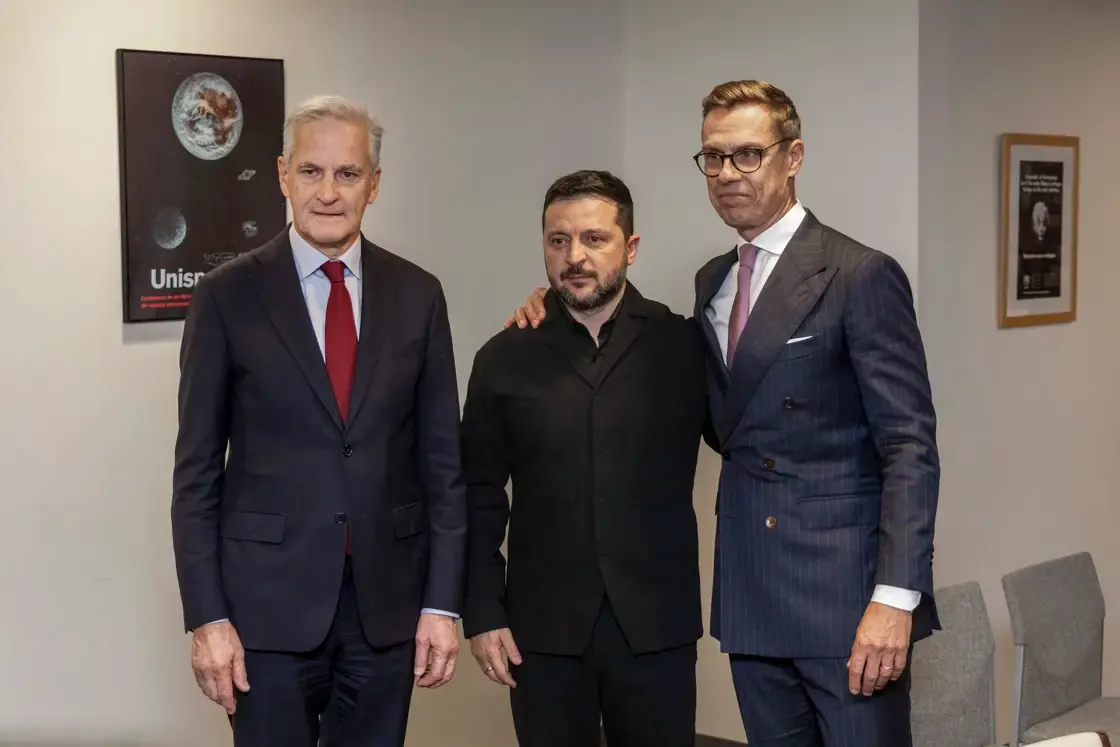
- Norway, Germany to launch €2 million grant program to support energy resilience of Ukrainian businesses
- Longer Reads: Poland and Ukraine's cautious friendship
Here's What They Think:
- The Economist: Alternative security arrangements may help Ukraine rebuild amid peace talks
- E-International Relations: 5 scenarios for Ukraine's war outcome amid changing global dynamics
- Tages-Anzeiger: Switzerland's prioritization of Ukraine over global crises raises ethical concerns
Sober Second Thought:
- Lessons on reconstruction for Ukraine from European cities destroyed in WWII: Perspective Daily

World Bank approves $664 million in additional funding for Ukraine under INSPIRE project
The World Bank approved on Thursday additional financing of $664 million for Ukraine under the Investing in Social Protection for Inclusion, Resilience, and Efficiency (INSPIRE) project, the country's finance ministry said.
Of the total, $662 million will come from the Japan-backed program Advancing Needed Credit Enhancement for Ukraine Trust Fund (ADVANCE Ukraine). The remainder will be provided as grant funding from the World Bank's Early Learning Partnership Trust Fund to support the expansion of childcare program.
The finance ministry said in a press release that $602 million of the funding will be allocated to the state budget.
The INSPIRE project seeks to safeguard social protection for low-income and vulnerable populations in Ukraine during and after the war, enhance access to social services and assistance, and strengthen the social support system.
The project, initially financed by a $1.2 billion World Bank loan, backed by a credit enhancement from ADVANCE Ukraine, was approved by the global lender in November 2023.
Japan allocates $235 million to Ukraine under World Bank's RISE, LEARN projects
Japan has provided $235 million in concessional financing to Ukraine under the World Bank's Resilient, Inclusive and Sustainable Enterprise (RISE) and Lifting Education Access and Resilience in Times of Need (LEARN) projects, Ukraine's finance ministry said.
Under the RISE project, which aims to support Ukrainian businesses in overcoming the challenges that affect their growth, Japan has allocated $130 million of the financing. The rest of the funds from Japan under the LEARN program will go toward improving educational processes under martial law.
Both World Bank programs are results-based financing. The Japanese funding thus comes as a result of Ukraine's achievement of some of the projects' objectives, the ministry said in a press release on Wednesday.
Since February 2022, budget support from Japan through the World Bank's mechanisms has reached about $6 billion, as per the statement.
The ministry said that Ukraine expects to raise an additional $120 million and $95 million under RISE and LEARN, respectively, by the end of the year.
The World Bank announced the $415 million LEARN project in August. The $593 million RISE program was launched last month.
EU commits to provide €18.1 billion to Ukraine as part of G7 loan
The European Union (EU) has pledged to provide €18.1 billion to Ukraine as part of the $50 billion loan package by the G7 group of countries backed by profits from frozen Russian assets.
The G7 group — the US, Canada, Japan, the UK, France, Germany, Italy, and the EU — reached an agreement on a promised $50 billion loan package for Ukraine in October. The package was first announced in June.
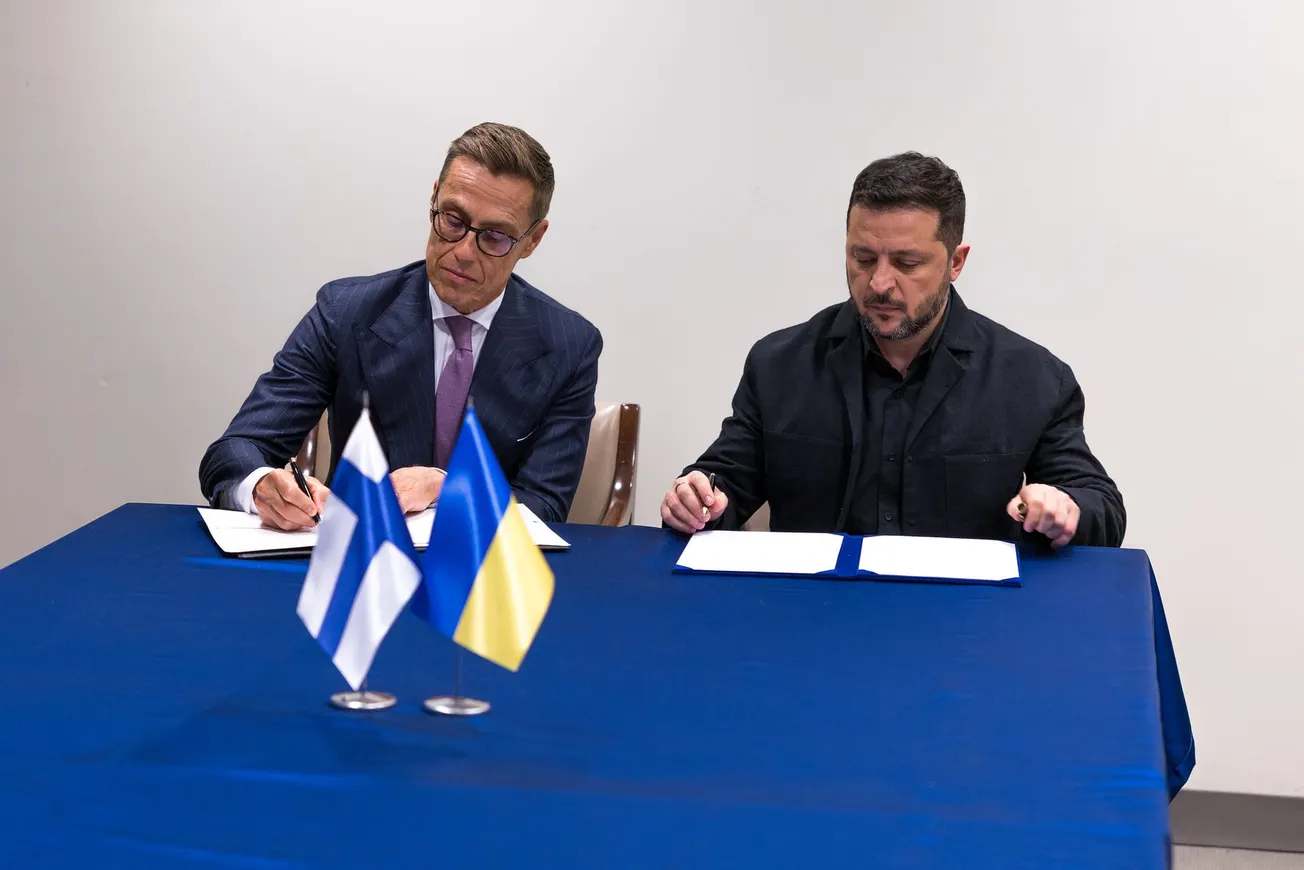
On Thursday, the EU and Ukraine signed a memorandum of understanding on the bloc's contribution to the package, Ukraine's Prime Minister Denys Shmygal and the European Commission Vice President Valdis Dombrovskis wrote in separate posts on X.
The EU initially pledged up to €35 billion before the G7 partners announced their contributions. The US later committed to providing $20 billion of the money, while the UK, Canada, and Japan also agreed to contribute.
"This is not just aid—it's a precedent for holding russia accountable for its crimes and ensuring it pays for its brutal war of aggression," Shmygal wrote on X.
Since Russia's full-scale invasion of Ukraine in 222, the EU has frozen approximately $235 billion in Russian central bank funds, representing the majority of immobilized Russian assets globally.
Norway, Germany to launch €2 million grant program to support energy resilience of Ukrainian businesses
Norway and Germany will launch a €2 million grant program in December to support energy sustainability of Ukrainian micro and small businesses, Ukraine's finance ministry said.
Under the program, entrepreneurs will receive grants to purchase energy-efficient production equipment, equipment for autonomous energy sources and storage, as well as for the installation and maintenance of such equipment.
The grants will be provided through four authorized banks: Ukrgasbank, Oschadbank, Sens Bank, and Bank Lviv, the ministry said in a press release on Thursday.
Micro enterprises will be able to draw up to €10,000 without mandatory bank loan requirements, while small businesses can receive up to €20,000 in grants, coupled with bank loans. Successful project implementation could result in up to 40% credit debt reimbursement, as per the statement.
The program, "Supporting the energy sustainability of micro and small enterprises in Ukraine," is implemented within the framework of the international cooperation project ReACT4UA ("Utilization and Implementation of the Association Agreement between the EU and Ukraine in the field of trade"), that is financed by Germany.
Longer Reads:
Handelsblatt: Poland and Ukraine's cautious friendship
Tensions are rising between Poland and Ukraine, as Polish farmers block the border crossing in Medyka in eastern Poland, stopping Ukrainian trucks from entering Poland while slowing traffic in the opposite direction to one truck per hour.
The farmers were protesting a trade agreement between the EU and Mercosur, the association of South American nations, Handelsblatt reported, citing Polish news agency PAP. They see the agreement as a threat to Poland's competitiveness.
Among other issues the farmers are protesting is the EU's policy to make it easier to import grain from Ukraine, which they fear could be a disadvantage to them and would add additional competitive pressure.
A recent study by Karolina Pawlak and Mariusz Hamulszuk has found that the trade of Ukrainian agricultural raw materials poses a great threat to the markets of EU member states. The researchers added that if Ukraine joins the EU, it could lead to "structural changes in Polish agriculture."
Agriculture is one of the issues straining relations between Poland and Ukraine, according to Handelsblatt. Among the other issues are the alleged mistreatment of Ukrainian refugees and the inadequate processing of historical events related to the Volhynian Massacre, which took place during WWII.
In February 1943, the Ukrainian Insurgent Army committed a massacre against Polish civilians. Ukraine has failed to comply with Poland's requests to exhume the victims, which is an issue top Polish politicians are linking to Ukraine's prospect of joining the EU.
In July, Polish Defense Minister Wladyslaw Kosiniak-Kamysz said during an interview with Polsat that not everything is perfect with Ukraine due to historical issues and there Ukraine will be no EU accession until the issue of Volhynia is resolved.
Kosiniak-Kamysz reiterated his comments in October, saying: "Ukraine will not join the European Union ... unless this issue is resolved, exhumations are carried out and appropriate commemoration takes place," according to Handelsblatt.
However, the tone changed on Nov. 26, when the foreign ministers of both countries met to discuss the development of Ukrainian-Polish relations. During the meeting, Ukrainian Foreign Minister Andryj Sybiha and Polish Foreign Minister Radosław Sikorski discussed bilateral issues, including historical ones, the Polish government said in a press release.
Sikorski expressed his country's readiness to share with Ukraine the experience of the EU accession process. In their joint statement, the minister said: "We emphasize that Ukraine should become a full member of the EU and NATO in the future. Poland supports the expansion of these organizations to include Ukraine."

The Economist: Alternative security arrangements may help Ukraine rebuild amid peace talks
The war in Ukraine has exposed Russia to economic vulnerabilities, while concern mounts over how US President-elect Donald Trump might handle peace talks, as a poorly negotiated deal could hand Russian President Vladimir Putin a significant victory with regard to his war aims, according to an opinion piece published by the Economist.
While NATO membership for Ukraine could be ideal for Kyiv, alternative arrangements like European-backed bilateral troop deployments could deter Russia, enabling Ukraine to rebuild its economy and strengthen its defenses.
E-International Relations: 5 scenarios for Ukraine's war outcome amid changing global dynamics
The prolonged war in Ukraine has defied early predictions and raised questions about its potential resolution, according to an op-ed published by E-International Relations. The writer argued that there are five potential scenarios that reflect the shifting of objectives of Ukraine, Russia, and other international actors.
The scenarios include negotiations driven by US policy shift under President-elect Donald Trump, prolonged fighting leading to a frozen conflict without a clear pathway for peace talks, Ukraine's defeat due to reduced Western support, a direct-Nato confrontation, and a prolonged war exhausting Russia while enabling Ukraine's recovery.
Tages-Anzeiger: Switzerland's prioritization of Ukraine over global crises raises ethical concerns
Switzerland's decision to allocate CHF 1.5 billion ($1.7 billion) for Ukraine's reconstruction raises ethical concerns, as this amount exceeds the current aid given to all of sub-Saharan Africa, University of Lucerne Professor Peter G. Kirchschläger wrote in an op-ed published by Tages-Anzeiger.
He argued that, while the support for Ukraine's recovery is crucial, the diversion of resources from other crisis regions like Africa and the Middle East threatens to undermine Switzerland's credibility as a humanitarian actor committed to global solidarity.

Lessons on reconstruction for Ukraine from European cities destroyed in WWII: Perspective Daily
German online publication Perspective Daily spoke with Dutch, Polish, and Ukrainian architects and urban planners about what Ukraine can learn about rebuilding its cities, from Rotterdam and Warsaw — the two cities destroyed by the German bombings in WWII and considered "icons of reconstruction."
Below are three lessons learned from the reconstruction of Rotterdam and Warsaw that may be valuable to Ukraine, as outlined by Perspective Daily:
- "Don't build paper cities that nobody wants to live in"
Instead of rebuilding Rotterdam as it was before the war, influential businessmen, government officials, and architects decided to rebuild it as a modern metropolis with skyscrapers made of glass and steel, wide boulevards for cars, and a strict separation of business and residential areas.
The problem is that the decision-makers did not ask the citizens of Rotterdam whether they wanted this. The discontent with the city's planning led to protests in the 1960s and 70s which resulted in a second phase of reconstruction that is still ongoing.
Paul van de Laar, Professor of History at Erasmus University Rotterdam, told Perspective Daily that Ukraine can learn from Rotterdam's experience.
"Don't ask the great architects," Van de Laar told the publication. "They start drawing and creating spectacular power points. Ask the people on the ground first: what do you want? Otherwise, you end up with paper cities that no one wants to live in."
- "How valuable is the rubble"
In 1946, the Polish Office for the Reconstruction of the Capital set up a department for the "rubble economy," which arranged for the rubble from Warsaw and all of Poland to be used as building materials for the reconstruction.
Some rubble could be immediately reused, including bricks and plaster, while other materials had to be crushed, sorted, and mixed to produce concrete for new buildings, with entire districts getting their foundations in this way.
Today, architects see a similar potential for recycling in Ukraine. For example, the Ukrainian-Polish Brda Foundation, founded in Warsaw in 2022, collects used windows from private households and public buildings in Poland and sends them to Ukrainian non-governmental organizations to repair damaged houses.
- "Do not leave it to Russia to rewrite history"
As evident in the example of Rotterdam's reconstruction, memories of the old city were lost and residents felt like strangers in their own community. However, Warsaw paints a brighter picture.
Architects in Warsaw decided to restore symbolic places and build new modern districts. Anyone who visits the old town quickly forgets that it was once destroyed.
"We must deal consciously with the collective memory," Oleksandra Tkachenko, an urban planner from Kyiv living in Rotterdam, told Perspective Daily. Tkachenko founded the Ukraine Netherlands Urban Network (UNUN), which connects Ukrainian specialists with Dutch planning and architecture firms, in 2022.
"We should not demolish damaged houses, but restore them or leave them as ruins," Tkachenko noted. "This is especially important in Ukraine, as Russia has been trying to rewrite our history for years."

Rotterdam and Warsaw both started planning their reconstruction before the war ended, so it is not unusual that Ro3kvit - Urban Coalition for Ukraine, an organization gathering more than 80 international experts, already drew up a project proposal for how Ukraine's war-torn city of Mariupol, which is still occupied by Russia, could look like after being restored, Perspective Daily noted.
The proposal, presented in June 2023 at the Lviv Urban Forum, includes a seafront promenade, a memorial center at the former Azovstal steel rolling mill, green spaces, affordable housing, and residential areas designed for short distances, among other solutions.
Total damage to Ukraine's infrastructure by January 2024 is estimated at $155 billion, with the housing stock particularly badly affected: 250,000 buildings had been damaged or destroyed, including 222,000 private homes, according to the report.


EBRD projects in Ukraine's public sector have attracted more than €1.2 billion in additional private investments, the Ministry of Finance of Ukraine said in a social media post about the results of joint initiatives.
Anastasiia Nahorna, a transport analyst at T&E, announced her firm is co-hosting an event in the European Parliament focused on EU aid for Eastern European countries after accession and the lessons Ukraina can draw.
Yevhen Udod, first deputy mayor of the Ukrainian city of Kryvyi Rih, posted about the Korea-Poland-Ukraine Infrastructure & Reconstruction Forum in Warsaw and "our collaboration with Hyundai Engineering on social housing and healthcare facilities."
The Ministry of Finance of Ukraine posted that Ukraine received $100 million as the first budget support from the Government of the Republic of Korea. The loan is for 20 years and bears an interest rate of 1% per annum. The grace period is 5 years from the date of signing the loan agreement.

URN Daily: Sense Bank and Ukrgasbank for sale? And US seeks to cancel $4.7 billion of Ukraine's debt