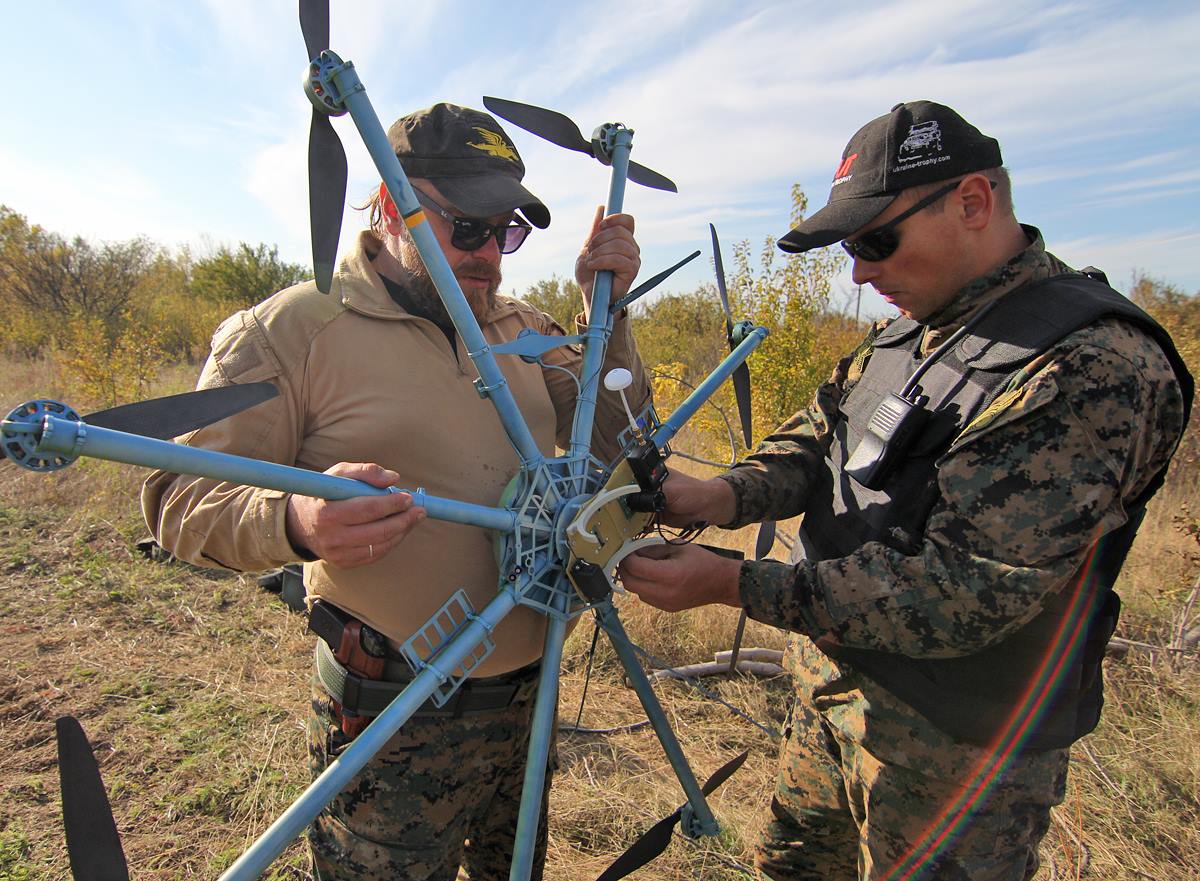
Reuters highlighted the work of Swarmer as one of "a handful of startups in Ukraine" searching for ways to better control large groups of drones for use in the war against Russia.
In an 800-word soft news piece, the news agency wrote that Ukraine hopes research into artificial intelligence will help it overcome the "signal jamming" tactic used by Russian troops so it can better attack enemy targets with large clusters of drones.
Swarmer is one of more than 200 tech firms created since the 2022 Russian invasion that focus on developing drones and other devices to help Ukraine counter a much larger enemy, Reuters wrote.
While the industry is "broadly split between visual systems helping identify targets and fly drones into them, terrain mapping for navigation, and more complex programs enabling UAVs to operate in interconnected swarms," Swarmer is working on the complex parts,
"When you try to scale up (with human pilots), it just doesn't work," Swarmer CEO Serhiy Kupriienko told Reuters in the company's Kyiv offices. "For a swarm of 10 or 20 drones or robots, it's virtually impossible for humans to manage them."
Swarmer, which received funding from venture capital fund D3 in November of last year, is developing systems so drones can be operated in a network, at levels of speed and coordination beyond what humane operators can achieve, the news agency wrote.
Although the amount of funding was not disclosed, D3, which also operates as an incubator, says it typically invests $125,000. Swarmer says it is based in Delaware and employs a team of engineers in the US, Poland and Romania.
Kupriienko told Reuters that the company system, called Styx, ensures that each dron in a group could plan its own moves to achieve its objectives and predict the behavior of the others in the swarm.